How to Get Rid of Anal Skin Tags
Non-Surgical Anal Skin Tag Treatment
Some tags may resolve on their own over time, while utilizing sitz baths and Proctozone 2.5%, a prescription topical ointment. In most cases, however, anal skin tag surgery is required.
Anal Skin Tag Surgical Treatment at Bespoke Surgical
Skin tags range from small to extra-large in size, and many have both physical and psychosocial ramifications. These limitations set the stage for surgical treatment with several options available, all depending on the severity. Skin tags are either removed via laser/electrocautery or surgical excision, with thought given to both functional and cosmetic goals.
While skin tags appear on the exterior of the body, they may actually be connected to something deeper. That’s why a thorough internal and external anal examination is key, prior to removal, as what looks to only be superficial is usually only the tip of the (anal) iceberg.
If a skin tag is found to be purely external, a simple in-office removal under local anesthesia can be performed with a quick recovery to follow. The pain is limited and most irritation occurs while wiping post-defecation. There are no limitations for exercise; however, bottoming or any kind of receptive anal play should be avoided for two weeks so that appropriate healing can take place. The good news is: topping is allowed.
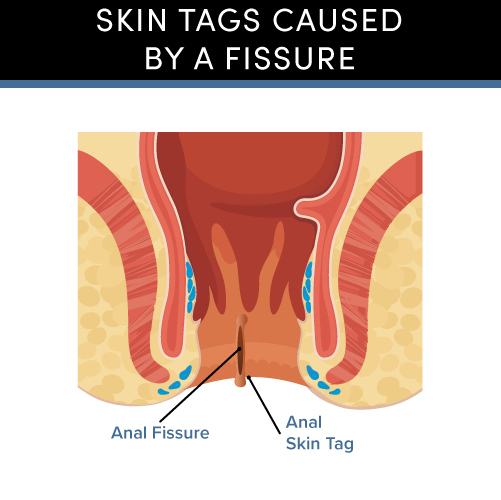
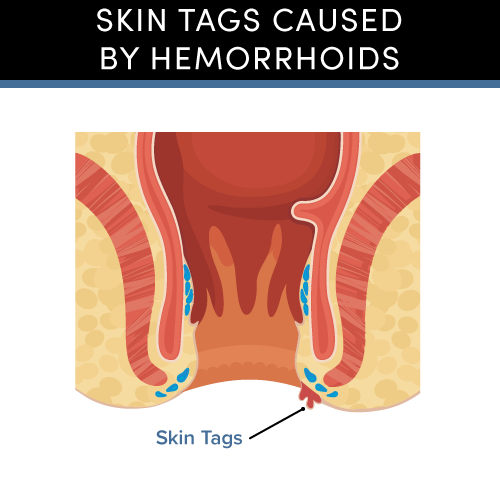
When external anal tags have an internal component, it stems from the healing of an anal tear (aka an anal fissure) or a dilated vein (aka a hemorrhoid). Regardless, you should take care of the skin tag in its entirety in order to see appropriate results. That means removing the skin tag and the pathology at hand.
To learn more about the anal skin tag surgery offered at our NYC office, contact Bespoke Surgical today.
Recovering from Anal Skin Tag Surgery
Many times, we add Botox to help aid the healing process because this relaxes the muscle sphincters. Additionally, there are times when we leave the wound open (meaning we do not suture it closed) for two reasons: first, it heals quite well when left open and secondly, in many people, we do not want to make the hole any tighter because this may limit normal defecation and/or sexual activity in the future.
Regardless of how the area is left after surgery, the healing process is similar. The first 3-5 days will be the most difficult, with feelings of constant annoyance and/or a sense of local spasm. Pain can be controlled with narcotics and Ibuprofen, combined with suppositories, lotions, and daily Epsom salt baths. Using a bidet during this time can be a gentler method of cleansing the area.
After this period comes 1-2 weeks of more localized pain during bowel movements. This time, using non-narcotic pain meds and continuing with the other aforementioned remedies will aid in recovery and minimizing discomfort. After another 2-3 weeks, the pain should be mostly resolved, though full healing will come after roughly 6-8 weeks post-surgery.
As for getting back to normal daily activities, clients can start exercising after 5 days and begin topping or engaging in non-anal play after one week. If used, the stitches are dissolvable; however, if the wound is left open, in-office cauterization of the wound with silver nitrate will aid in healing. At the eight-week mark, we start using anal dilators to assist in healing and restoring the anal architecture. This fully allows for our clients to achieve their anal desires, if that’s part of their goal.